The Evidence Base
The Science and Urgency Behind the
GBB 3-Day Recovery Residency
**The Elephant in the Room: The Promise and Challenges of Peer Support**
Peer support has truly emerged as a cornerstone of recovery programs, infusing hope and practical wisdom that enrich both clients and staff when properly trained and seamlessly integrated with clinical teams. Many pioneers in our field started as peers, contributing significantly to the profession’s growth and advancement.
That said, not all peer support experiences are created equal. The industry often lumps all types of peer support together, overlooking the rich diversity in experience, recovery duration, and skill sets. Master-level peers stand out for their extensive recovery experience, advanced facilitation and mentoring skills, and specialized training in areas like trauma-informed care and ethics. Many hold degrees in counseling or related fields and often guide entry-level peers while actively shaping program development. Their deep expertise helps them navigate complex scenarios with confidence, support clinical teams, and inspire both clients and fellow staff.
While research has largely focused on entry-level roles, we must broaden our understanding of master-level, long-term recovery leaders with extensive clinical training. As the field advances, we must continue to close the evidence gap.
Lived experience should complement—not replace—clinical care. When delivered thoughtfully and skillfully, peer support amplifies engagement, fosters hope, and nurtures lasting recovery. Let’s champion peer support’s potential together!
What the Research Shows
- Engagement & retention: Peer-led, lived-experience interventions help clients stay connected to support—often the key to lasting change.
- Hope & recovery identity: Clients who see credible long-term recovery believe change is possible.
- Skill-building: Participants practice real-world tools—boundaries, communication, self-advocacy.
- Transparency: When shared skillfully, transparency breaks denial and secrecy—creating trust and deeper connection.
- Getting to the “what’s so about what’s so”: Facing the truth—without avoidance—is the turning point for real change. Strategic confrontation lands differently as a group, because no one is being pointed out. When it lands as a question to consider hard truths, denial and fear take a back seat to curiosity. Here is where what’s possible turns curiosity into empowerment to change for themselves.
Key research findings:
- Cochrane Review (2020): Structured 12-Step Facilitation increases abstinence rates (42% vs. 35% at 12 months) and lowers costs. (Kelly et al.)
- Oxford House Study (2006): Residents were twice as likely to remain abstinent at two years and 1.5x more likely to be employed. (Jason et al.)
- Bassuk et al. (2016): Peer support improves engagement, retention, and quality of life. The strongest evidence is for connection and ongoing support, underscoring its value in recovery programs.
- SAMHSA TIP 64 (2023): Federal guidance recommends all SUD settings offer or arrange for peer support.
Important Framing
When paired with clinical excellence, lived experience in long-term recovery is the next frontier. The “eagle hasn’t landed” yet, but it’s coming—and GBB Inspirational Recovery is built to lead the way. Join us now to help advance this model and bring it to life.
What it Looks Like in The Room
Where lived experience turns evidence into action.
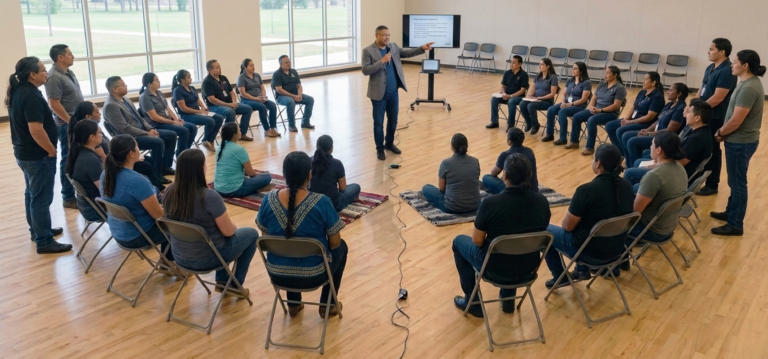
The 3-Day Residency is an immersive, high-accountability experience that moves residents from spectators to active architects of their recovery. With 41 years in recovery, 14 years as a clinician, and 26 years as a professional speaker, I build immediate, authentic connection—so the room moves toward real change and everyone sees the value in the process.
My “we, our, and us” approach means there’s no pedestal—just partnership. Residents quickly see: I am one of them. Meeting people where they are breaks down defenses and strengthens connection, making the Residency a catalyst for real change.
I don’t do the work for them; we do it together. We tackle the hardest truths, laugh, learn, and grow—side by side. By the end, everyone is moved and empowered—ready to own their next step and carry that value forward. By the end, everyone is excited, moved, and empowered—knowing they can create the life they choose.